
A delegation of ten senior agribusiness leaders from India will spend a week in New Zealand from 4 to 11 June, meeting growers, exporters and innovators across Waikato, Auckland and Tauranga before joining the country’s biggest agricultural showcase, Fieldays, on 12 June.
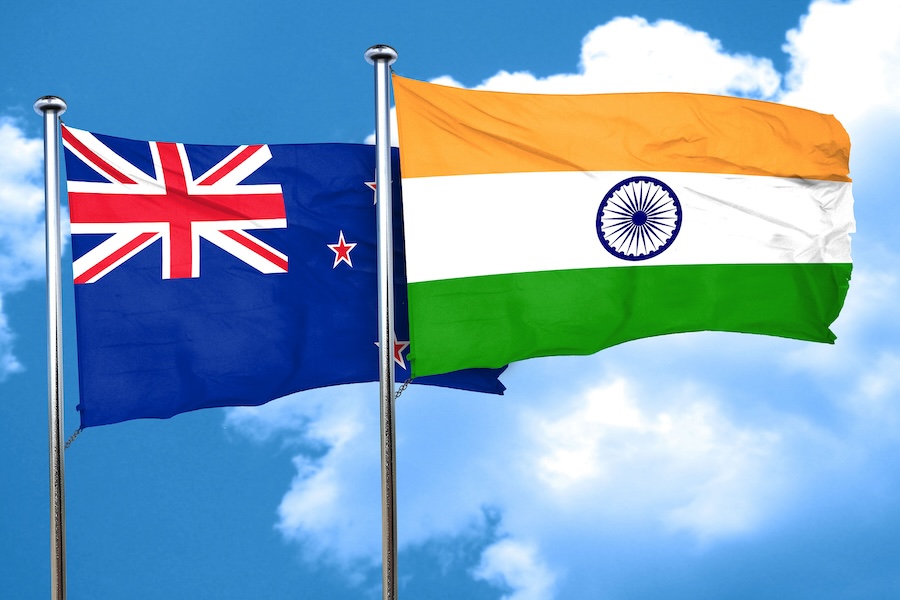
The visit, organised by the Asia New Zealand Foundation through its New Zealand India Entrepreneurship Initiative (NZIEI), arrives on the back of the recently signed India-New Zealand Free Trade Agreement, a deal that is already reshaping the conversation between exporters in both markets.
Among the delegates is Pulkit Mittal, Vice President of the Growth Office at Tractors and Farm Equipment Limited (TAFE), one of India’s largest agricultural machinery manufacturers. He says he applied to the programme to better understand how New Zealand has built its globally respected agricultural systems.
“I’m particularly looking forward to engaging with agribusiness leaders and exploring how emerging technologies in areas like farm data systems, livestock intelligence, and mechanisation can create meaningful collaboration opportunities between New Zealand and India,” Mittal says.
Asia New Zealand Foundation Director of Business Tim McCready says the FTA is a strong tailwind, but commercial outcomes still depend on relationships.
“The Free Trade Agreement between India and New Zealand is a fantastic opportunity, but ultimately it is people who make business happen,” McCready says.
“Fieldays puts them in front of the right people in one place, while also showcasing New Zealand as a globally competitive player in agriculture. Over the course of the week, they will be meeting with New Zealand businesses that have as much to learn from them as they do from us.”
The programme is already producing measurable export wins. Indian fruit supplier Rohan Ursal, who attended last year’s inaugural delegation, has since introduced a new New Zealand apple variety, the Rouge, to the Indian market through his company, Purandar Highlands Farmers Producer Company Ltd. He is also importing Royal Gala, and credits both the FTA and the commercial traction of the Rouge for generating new inbound interest from New Zealand.
“This year, we have people connecting with us, new suppliers and small growers from New Zealand trying to seek new markets or seek new buyers like us in India,” Ursal says. “In the next five years, I think we will see very good growth in this sector.”
Ursal says the next step is developing a deeper understanding of how each market operates, something he expects will take time but sees being on the ground in each country as an essential part of this process.
That kind of follow-through is what the Foundation is targeting. Chief Executive Suzannah Jessep says the programme reflects a belief that lasting commercial relationships are built when people understand each other, trust each other, and stay connected over time.
“By bringing India’s future agribusiness leaders to New Zealand, onto our farms, alongside our growers and innovators, we are helping to build intergenerational partnerships, and we’re creating a cohort of young leaders in India who not only understand New Zealand but who will champion the New Zealand relationship when they get home,” Jessep says.
NZIEI is modelled on the Foundation’s longer-running ASEAN Young Business Leaders Initiative, which since 2011 has brought 159 Southeast Asian business leaders to New Zealand and sent 81 New Zealanders into ASEAN markets, a track record that suggests this year’s Indian cohort could shape export pipelines well beyond the week they spend on the ground.
The 2026 NZIEI delegation: Pulkit Mittal (TAFE Tractors and Farm Equipment Ltd.); Nimit Singh (Madhumakhiwala); Prabhat Kumar (SumArth); Swapnil Jadhav (Map My Crop); Himani Padalia (Farmbridge Consulting LLP); Rohit Bajaj (Modish TractorAurkisan Pvt. Ltd.); Bhushan Yalmar (Zorro QC / Renzu QC Services LLP); Vikas Mishra (Evergreen Innovation Platform); Subhajit Sinha (4CLIMATE); and Amrita Mukherjee Ganguli (Arogyam Medisoft Solution Pvt. Ltd).