
A landmark Free Trade Agreement between New Zealand and India is being described by business leaders and government as a transformational moment for exporters, unlocking access to one of the world’s fastest-growing economies and reshaping long-term trade strategy.
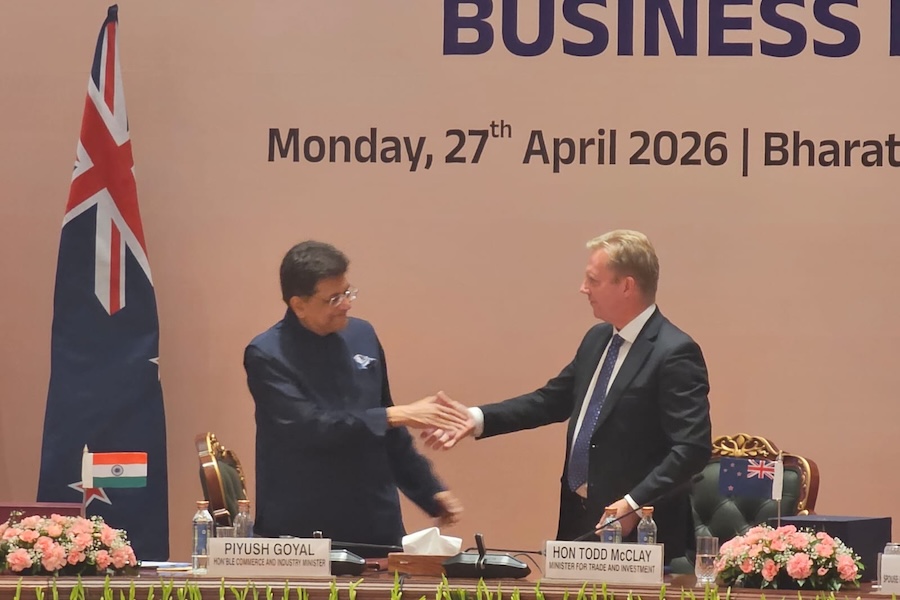
Signed in New Delhi this week by Trade and Investment Minister Todd McClay alongside Indian Minister for Commerce and Industry Piyush Goyal, the agreement is expected to reduce or eliminate tariffs on around 95 percent of New Zealand exports once fully implemented.
The deal was formally welcomed by the India New Zealand Business Council (INZBC), which says it reflects years of relationship-building between government and industry.
INZBC Chair Edwin Paul says the agreement marks a shift from negotiation to execution.
“Trade agreements only work when they’re underpinned by trusted business-to-business relationships,” he says. “This reflects many years of hard work and goodwill between government and industry in both countries.”
The agreement comes as two-way trade between New Zealand and India sits between NZ$3.7 billion and NZ$3.95 billion annually, depending on measurement, but is widely seen as having significant upside as India’s economy continues to expand rapidly.
Prime Minister Christopher Luxon says the deal positions New Zealand businesses to benefit from access to a market of more than 1.4 billion people.
“One in four jobs are tied to trade,” he says. “In signing this FTA we are setting businesses up to succeed, boosting Kiwi jobs and enabling economic growth.”
Trade and Investment Minister Todd McClay says the agreement is central to New Zealand’s export growth ambitions.
“This deal will deliver thousands of jobs and billions of dollars in additional exports,” he says. “Creating opportunities for our businesses to diversify and create strong trading relationships provides economic security.”
Under the agreement, more than half of New Zealand exports will receive immediate duty-free access, including sheep meat, wool, forestry products and a range of industrial goods. This is expected to rise to 82 percent over time, with tariff reductions phased across remaining product categories.
Sectors set to benefit include horticulture, dairy, seafood and manufactured goods, with kiwifruit, apples, mānuka honey and wine all receiving improved access conditions over transition periods.
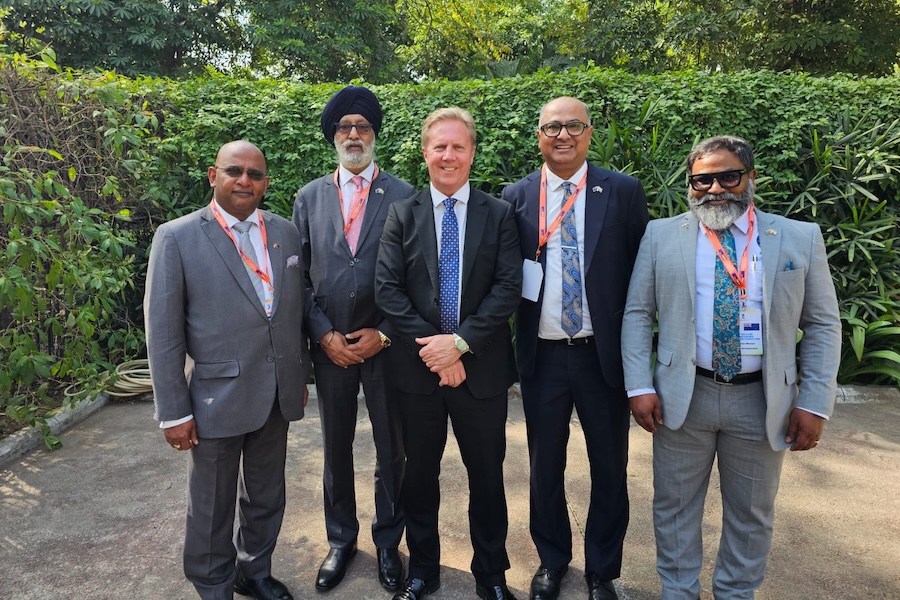
The INZBC delegation with Minister Todd McClay.
The agreement also includes a Most Favoured Nation (MFN) clause for wine and services exports, which officials say could deliver tens of millions of dollars in additional export value depending on future trade outcomes with other markets.
Beyond tariff reductions, the deal is expected to deepen New Zealand’s services and technology links with India, reflecting a broader shift in the bilateral relationship.
“Over the past decade, our commercial relationship has broadened and matured beyond traditional trade into technology, services, research and advanced manufacturing,” McClay says.
Industry groups say the agreement has been strengthened by sector-level collaboration over time. The horticulture sector, for example, has worked with Indian counterparts on long-running initiatives such as the kiwifruit-focused action planning led by industry body Zespri.
INZBC says such collaboration has been critical to building trust ahead of the agreement.
“India remains a complex and highly competitive market,” Edwin Paul says. “Success for New Zealand lies in sustained commitment, local partnerships and a long-term approach.”
The council also used the signing to formalise new links with Indian industry, signing a memorandum of understanding with ASSOCHAM, one of India’s largest business chambers representing more than 450,000 members.
The MoU is intended to provide a structured platform for business engagement between the two countries, supporting exporters seeking to enter or expand in the Indian market.
While the agreement has been broadly welcomed, officials note it is only the beginning of a longer legislative and implementation process, with the text now subject to parliamentary scrutiny before enabling legislation is introduced.
Even so, business leaders say the scale of opportunity is significant and long-term in nature, particularly given India’s projected trajectory as the world’s third-largest economy.
As Paul puts it, “The scale of the opportunity for New Zealand businesses is huge — but realising it will require patience, partnerships and persistence.”