


A new private 5G network at Lyttelton Port Company is highlighting how next-generation connectivity could reshape operations, resilience and efficiency across New Zealand’s export supply chain.
Delivered in partnership with 2degrees and Ericsson, the network has been deployed across the South Island’s largest container port, which handled 434,000 containers in FY2025 alongside bulk cargo, cruise and fuel operations.
For exporters and logistics providers, the move reflects a broader shift toward digital infrastructure that can support increasingly complex, time-sensitive global trade flows.
Lyttelton Port Company Chief Information Officer Jackie Dawson says the investment was driven by the need for more reliable, high-performance connectivity across a challenging operating environment.
“LPC introduced private 5G to make operations safer, more reliable, and better connected.
“We needed stronger network performance across the port so our teams and equipment could work without interruption.
“This supports our long-term digital plans and helps us run a safer, more efficient and more resilient port for our customers and our community.”
The port’s geography – including volcanic rock formations and signal interference from stacked containers – has historically limited the effectiveness of traditional connectivity such as Wi-Fi and fibre. The private 5G network is designed to overcome these constraints, providing secure, high-speed coverage across the entire site.
The system supports a range of operational applications, including mobile asset tracking, tele-remote control of heavy machinery, job dispatch systems, safety alarms and real-time video streaming for security and monitoring.
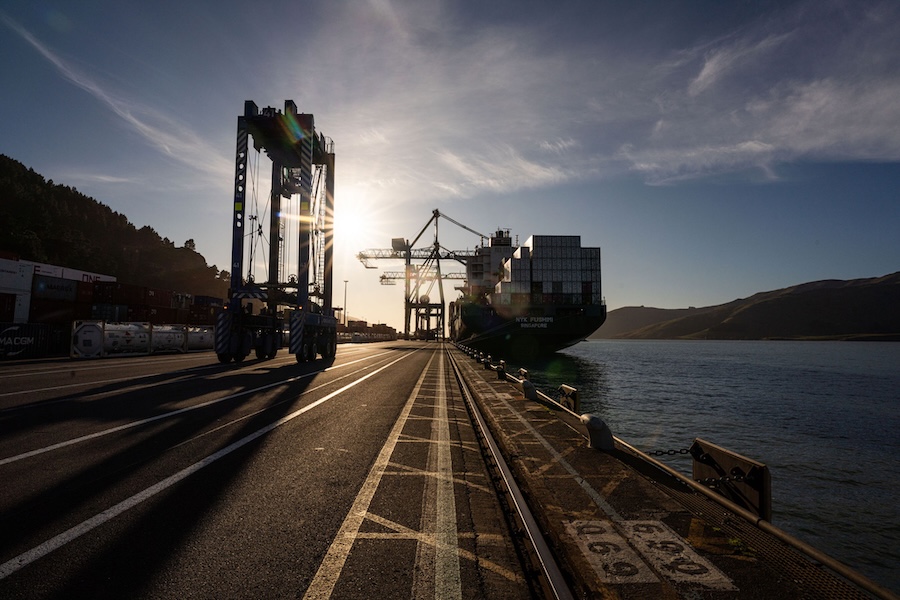
At the operational level, straddle carriers are equipped with rugged routers that use the private 5G network as the primary connection, with the public mobile network acting as a backup. This dual-layer approach is aimed at maintaining continuity in environments where downtime can quickly translate into delays across the wider supply chain.
Andrew Fairgray, Chief Business Officer at 2degrees, says the project demonstrates how private networks can move beyond traditional infrastructure limitations.
“2degrees is committed to delivering world-class innovation that solves Kiwi business challenges. We are thrilled to have completed this landmark project for Lyttelton Port Company.
“By moving beyond the limitations of traditional connectivity, we’ve provided Lyttelton Port Company with a foundation for the future – one that ensures operational resilience and opens the door to next-generation automation.”
 Fairgray says uptake of private 5G is accelerating globally across industrial sectors.
“Internationally, industrial enterprises are increasingly turning to private 5G solutions when they need fast data transmission, lower latency, and the ability to connect a wide range of devices in a business-critical operational area. Private 5G networks are seen as the gold standard for critical applications in factories, warehouses, airports, mining, and ports. They provide dedicated connectivity, performance, and data privacy.”
From an export perspective, the implications extend beyond the port itself. Improved connectivity enables faster cargo handling, better asset visibility and more predictable turnaround times, factors that directly affect exporters’ ability to meet international delivery expectations.
Ian Ross, Head of Private Networks ANZ at Ericsson Enterprise Wireless Solutions, says the technology underpins broader supply chain gains.
“Private 5G is a foundational infrastructure for modern industrial environments.
“By delivering ultra-reliable, low-latency connectivity to every corner of a port, operators like Lyttelton Port Company can achieve unprecedented levels of digitalisation, asset visibility, and operational efficiency.
“We’re pleased to work with 2degrees and the Port to provide 5G connectivity solutions that enable streamlining of workflows, enhanced safety for workers, improved security, and optimisation in the movement of goods – ultimately enabling lower costs, faster turnaround times, and a more resilient supply chain.”
Lyttelton Port Company is already exploring further applications, including connecting environmental sensors for wind and stormwater monitoring, as well as deploying drones integrated with AI tools for infrastructure inspections.